China Top 10 Super Absorbent Door Mat Manufacturers
China’s Super Absorbent Door Mat market is expanding with practical, design-led products for homes, hotels, offices, and commercial entrances. Buyers now expect more than a soft surface. They want fast moisture capture, strong edge sealing, stable backing, easy washing, and dependable performance after repeated use.
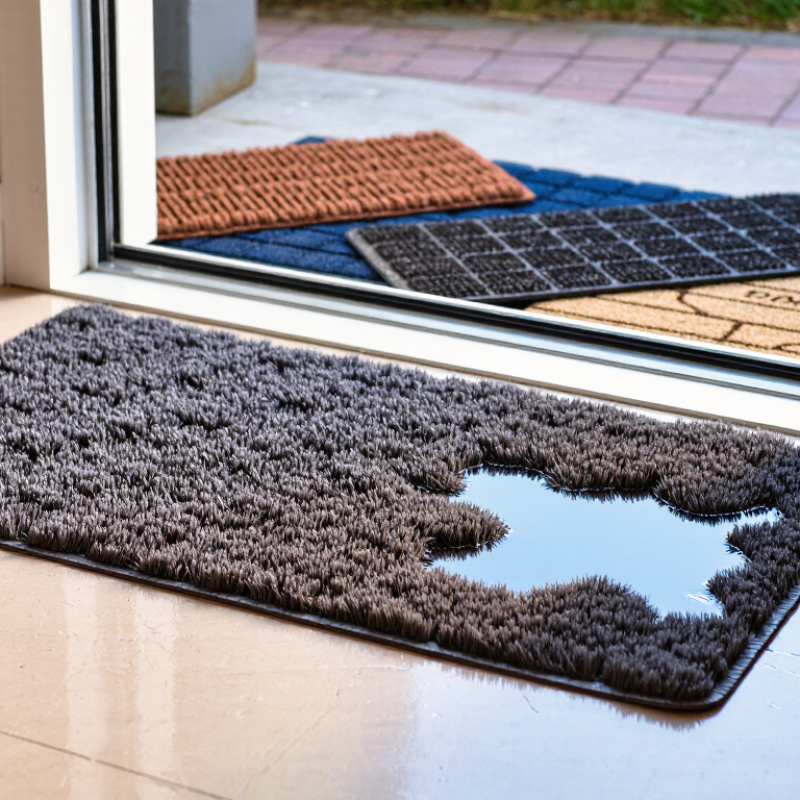
Dr. Charles P. Gerba, a microbiologist recognized for research on household contamination, has said, “A doormat is the first line of defense against tracked-in dirt and moisture.” This principle remains useful when evaluating leading manufacturers. A reliable Super Absorbent Door Mat should hold water beneath wet shoes without leaving puddles across polished floors. Its fibers should feel dense, yet dry within a reasonable period after cleaning. The backing should also remain flat beside door thresholds, where curling can create a trip risk.
This overview examines ten leading Chinese manufacturers through product quality, material selection, production experience, customization ability, export reliability, and customer support. Some companies focus on microfiber chenille. Others develop rubber-backed, washable, printed, or hospitality-grade designs. Their strengths are not identical.
No ranking is perfect. Supplier claims still require verification.
Samples, test reports, factory audits, and delivery records can reveal differences hidden in product photos. A low price may look attractive, but weak absorption or poor backing can increase replacement costs. The following selection aims to provide a practical starting point for importers, distributors, architects, and facility managers seeking dependable Super Absorbent Door Mat suppliers from China.
What Defines a Super Absorbent Door Mat Manufacturer
A super absorbent door mat manufacturer is defined by repeatable performance, not a glossy catalog. In China’s competitive manufacturing sector, experienced producers study entryway traffic, floor types, and seasonal moisture. They choose fibers that pull water quickly, then test how much moisture the mat retains after pressure. A useful test uses measured water, timed absorption, and a scale. Small details matter.
Professional production also depends on backing design. A stable PVC or rubber-like layer should resist curling while protecting smooth indoor floors. Edges need firm stitching or heat bonding, because loose borders collect grit and weaken after washing. Reliable manufacturers record fiber weight, backing thickness, dimensions, and batch results. Those records make problems traceable. Independent testing can strengthen confidence, especially for slip resistance, colorfastness, and repeated laundering. But laboratory figures are not the whole story. A mat that absorbs well may dry slowly in a humid apartment.
Manufacturers with real expertise ask where the product will be used. They may adjust pile height for muddy entrances or select a lighter weave for quick drying. Clear communication matters too. A dependable supplier explains limits instead of promising impossible performance. No factory gets every batch perfect. The stronger ones inspect finished mats, accept reasonable feedback, and correct recurring defects. That practical discipline separates a super absorbent mat maker from a seller who only repeats technical claims.
How China’s Top 10 Manufacturers Are Selected and Ranked
China’s top 10 super absorbent door mat manufacturers should be selected through evidence, not search visibility. The process starts with verified factory information, production capacity, and documented quality controls. A practical audit checks fiber density, edge stitching, backing grip, and color stability. Each mat should face repeatable tests for water pickup, drying time, shedding, and wash durability. Samples are tested before ranking. Evidence matters. Independent laboratory reports strengthen confidence, but they cannot replace factory visits or production records. We also review material traceability, worker safety procedures, packaging accuracy, and response times for technical questions. These details reveal whether a supplier can repeat results across large orders.
Ranking uses weighted scores rather than a single impressive sample. Product performance receives the greatest weight, followed by manufacturing consistency, testing transparency, customization control, delivery reliability, and after-sales communication. Manufacturing consistency matters. A company with excellent samples but uneven batches should not lead. Customer feedback is compared across regions and order sizes, while recent evidence receives more weight than old claims. Still, this method has limits. Factory conditions can change, test methods may differ, and public information is often incomplete. Numbers can mislead. A thoughtful ranking should show its criteria, retain test records, and revise results when new evidence appears. No ranking is permanent.
Profiles of China’s Top 10 Super Absorbent Door Mat Manufacturers
China’s top ten super absorbent door mat manufacturers reflect different strengths in materials, production, and quality control. One focuses on dense microfiber piles for wet shoes. Another develops quick-drying chenille surfaces with softer touch. A third uses recycled fibers, although its texture may vary between batches. Several manufacturers combine rubber or PVC backing with heat-sealed edges. These details matter in homes, hotels, and commercial entrances.
Some factories specialize in custom sizes, colors, and private packaging. Others serve large orders with automated cutting and stitching lines. Experienced manufacturers usually test absorbency, colorfastness, backing grip, and wash durability before shipment. A reliable supplier should provide sample approval, material specifications, and batch inspection records. Factory visits can also reveal storage conditions, worker training, and production discipline. Photos alone are not enough.
The strongest producers often improve designs through customer feedback. They may adjust pile height for faster moisture release or strengthen corners after repeated-use complaints. Still, no manufacturer is perfect. A highly absorbent mat may dry slowly in humid weather. A strong non-slip backing may feel less flexible. Buyers should compare laboratory results with practical trials on stone, tile, and wood floors. Clear communication remains essential when evaluating China’s leading manufacturers.
Materials, Technologies, and Customization Options Compared
China’s leading super absorbent door mat manufacturers use different materials for different entryway conditions. Polyester microfiber offers fast water pickup, soft texture, and efficient machine washing. Cotton feels natural but may dry slowly in humid rooms. PVC or TPR backing improves floor grip, while recycled fibers can support sustainability targets. Performance varies.
Manufacturing technology strongly affects daily use. Needle-punching creates dense surfaces that trap moisture and dust. Tufting produces deeper piles, although thick mats may hold odors without proper drying. Heat-bonded layers can improve stability, but weak bonding may cause edge separation after repeated washing. Reliable suppliers should provide absorption tests, colorfastness results, slip-resistance data, and wash-cycle evaluations. Details matter.
Customization usually covers size, shape, pile height, backing, edge binding, color, and packaging. Some factories support logo patterns through digital printing or woven construction. For hotels, entrance mats may need darker colors and reinforced borders. Residential buyers often prefer thinner designs for door clearance. Custom samples should be tested on real flooring, not only reviewed in photographs. Laboratory results can differ from household performance. I would also question unusually high absorption claims, because testing methods are not always comparable. A practical comparison should examine drying time, odor control, shedding, curling, and replacement cost alongside water capacity.
China Top 10 Super Absorbent Door Mat Manufacturers – Materials, Technologies, and Customization Options Compared
This material benchmark compares the approximate equilibrium moisture regain of common door-mat fibers under standard textile testing conditions of approximately 20°C and 65% relative humidity. The values are material properties rather than company or brand data.
| Material System |
Typical Technology |
Common Customization Options |
| Cotton |
Absorbent loop or cut-pile construction |
Size, color, edging, logo, and anti-slip backing |
| Polyamide / Nylon |
Dense tufting, solution dyeing, and reinforced pile |
Pattern, border, pile height, shape, and backing compound |
| Polyester Microfiber |
Micro-split fibers, high-surface-area pile, and quick-dry construction |
Printed graphics, color matching, dimensions, and packaging |
| Polypropylene |
Needle-punch or loop pile with water-resistant backing |
Indoor/outdoor sizes, UV-resistant colors, edge binding, and die-cut shapes |
| Wool |
Resilient twisted pile and natural moisture-buffering construction |
Premium patterns, custom dimensions, woven labels, and tailored borders |
Note: Equilibrium moisture regain values are approximate reference values commonly reported for textile fibers. Actual door-mat water pickup depends on fiber geometry, pile density, yarn structure, backing, thickness, and testing method.
How to Choose the Right Chinese Door Mat Manufacturer
Choosing the Right Chinese Door Mat Manufacturer
A reliable Chinese door mat manufacturer should prove performance, not only display attractive product photos. Request physical samples in several sizes and colors. Pour measured water onto each mat. Check absorption speed, drying time, edge curling, and floor grip. A mat that feels soft may still leave moisture underneath.
Review the factory’s material details carefully. Ask about fiber composition, pile height, backing type, stitching, and weight per square meter. Recycled fibers can be useful, but their quality may vary between batches. Request test reports with clear methods and recent dates. Also inspect production areas through a video call or an independent audit. Clean storage and organized packing often reveal more than a polished catalog.
Compare the manufacturer’s minimum order, sample process, lead time, and replacement policy. Written quality standards matter. Define acceptable size tolerance, color variation, odor, loose threads, and backing defects before placing an order. A low quotation can hide weaker rubber, rushed inspection, or expensive shipping later. I have found that buyers sometimes focus too heavily on price. That is a mistake. Even careful buyers can overlook packaging strength. Ask for carton photos, drop-test details, and random inspection records. Start with a small trial order when possible. It exposes problems early, although it cannot predict every seasonal production issue.