
Choosing an outdoor doormat is a small decision with practical consequences. It affects cleanliness, safety, curb appeal, and replacement costs. For global buyers, the choice becomes more complex because climates, entry designs, and consumer habits vary widely.
The Freedonia Group’s World Floor Coverings report identifies renovation, construction activity, and replacement demand as important market drivers. Grand View Research also notes continued interest in durable, low-maintenance flooring products. These findings matter for buyers comparing a Front Door Mat Outdoor product across residential, hospitality, and commercial settings. A mat must handle rain, dust, mud, ultraviolet exposure, and repeated foot traffic. A stylish surface means little if it curls after one wet season.
Environmental microbiologist Dr. Charles P. Gerba has often connected footwear with household contamination. His practical message can be expressed clearly: “The best dirt is stopped before it crosses the threshold.” That principle guides this selection. We examine scraping performance, water absorption, backing stability, fiber recovery, cleaning effort, and packaging suitability. Material details matter. Rubber edges should lie flat. Coarse fibers should remove grit without damaging delicate floors. Drainage should work beside a wet porch, not only in a product photograph.
No ranking fits every climate. A coconut-fiber mat may suit a covered entrance, while recycled rubber may perform better near heavy rain. Some claims also deserve skepticism. “All-weather” is not a test result. This guide compares the top 10 options for global buyers, using practical use cases and published market context rather than appearance alone. Expect useful differences, but not a perfect winner.
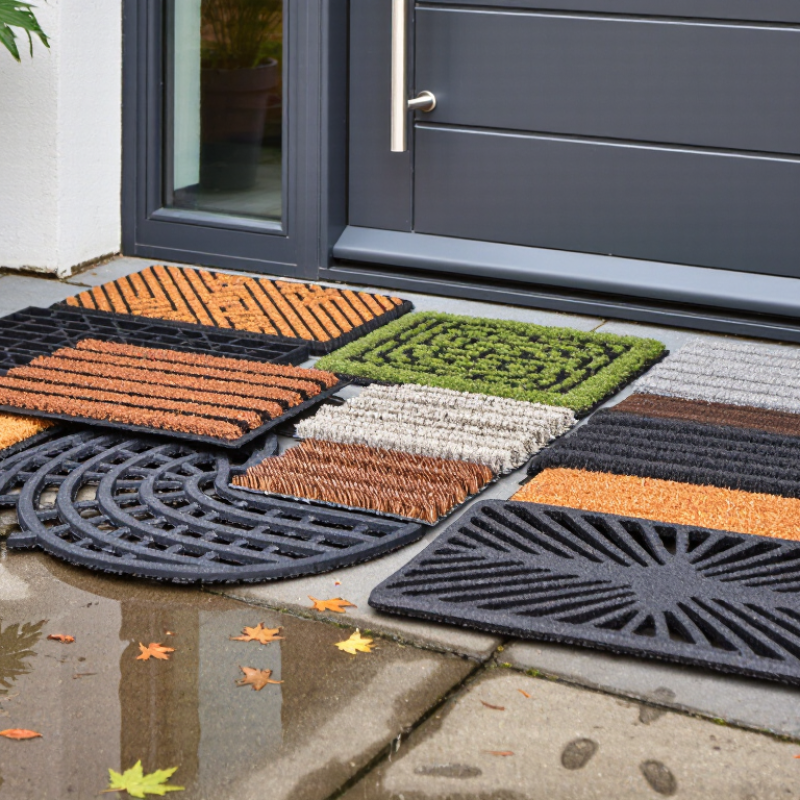
An outdoor front door mat for global buyers must handle more than muddy shoes. It may face tropical rain, dry dust, coastal salt, or freezing temperatures. A suitable mat needs water-resistant fibers, strong stitching, and a backing that stays stable on stone, tile, or concrete. It should also dry quickly after heavy rain. A soaked mat becomes unpleasant and may develop odors.
Size matters across different entrances. Buyers should measure the doorway, including the opening direction and available floor space. A mat that is too small misses dirt, while an oversized mat can block the door. Raised patterns help scrape shoe soles, but shallow designs are easier to clean. Drainage is important in wet regions. In colder areas, the backing should remain flexible instead of cracking.
During product checks, I look at edge binding, surface recovery, and how much grit falls away after repeated use. Small details matter. A rolled edge can catch a shoe. A weak backing can curl after sunlight exposure. I once focused too much on appearance and overlooked cleaning effort. That was a useful mistake. Global buyers should check washing instructions, packaging dimensions, and replacement availability before ordering. Materials should be clearly described, with practical care guidance rather than vague claims. Local weather and entrance conditions still decide whether a mat performs well.
What makes an outdoor front door mat suitable for global buyers? The benchmark below compares weather resistance, drainage, cleaning ease, slip resistance, and suitability for common international entrance sizes.
The Outdoor Suitability Index is an editorial benchmark scored from 0 to 100. Higher scores indicate stronger overall performance for varied climates, frequent foot traffic, wet conditions, easy maintenance, and widely used door-entry dimensions. Actual performance depends on construction quality, installation surface, climate, and maintenance.
When ranking outdoor front door mats for global buyers, I compare material, drainage, grip, scraping power, and weather resistance. Performance comes before appearance. A mat should remove grit without sliding across wet tile.
Rubber ranks first for stability and rain resistance, especially near busy entrances.
Coir ranks second because its rough fibers scrape mud and sand effectively.
Polypropylene takes third place for quick drying and strong color retention.
Recycled PET ranks fourth, offering light weight and useful moisture resistance.
Nylon ranks fifth for fast drying, although it may flatten under heavy traffic.
Aluminum ranks sixth for excellent scraping, but it can feel harsh and needs a stable base.
Teak ranks seventh for natural style and drainage, yet it requires regular care.
Cotton ranks eighth because it absorbs well, though outdoor drying can be slow.
PVC ranks ninth for low cost and easy cleaning.
Natural rubber blends rank tenth when buyers need flexibility and moderate grip.
Testing helps expose weaknesses. I have found that a thick mat can trap water instead of removing it. That detail is easy to miss.
In snowy regions, drainage and edge height matter more than softness. In hot climates, UV resistance becomes essential.
Coir may shed fibers, while rubber can smell strongly when new. My ranking is not universal. A shaded apartment entrance needs different performance from a sunny retail doorway.
Check the backing, ventilation, and cleaning instructions before purchase.
Choosing among the top ten outdoor front door mats starts with climate, not appearance.
In rainy regions, open-grid rubber mats let water escape and scrape mud from deep treads. Coir mats suit covered entrances because their stiff fibers trap dry grit effectively. They can shed fibers, however, when constantly soaked. For snowy areas, choose a thick, flexible mat with a raised pattern. It should remain stable when ice forms beneath it. That detail is easy to overlook.
Hot, sunny entrances need UV-resistant polypropylene or rubber blends. Dark colors may become noticeably hot on exposed stone. For coastal homes, select corrosion-resistant materials and rinse away salt regularly.
High-wind locations need heavy backing or recessed placement. Light mats slide. Apartment corridors, balconies, porches, and shop entrances each demand different proportions.
A narrow corridor favors a low-profile mat that will not catch doors. A wide porch can handle a two-zone system: scraper outside, absorbent layer under cover.
The ten useful formats cover open-grid rubber, molded rubber, coir, polypropylene, and recycled rubber. Other choices include PVC, brush-style, low-profile woven, scraper, and heavy-duty drainage mats.
That range sounds complete, but it is not foolproof. Measure the doorway, check the threshold gap, and inspect the underside weekly. Uneven floors can still cause movement.
From practical testing, drainage and grip matter more than decorative texture. Still, my preference is not universal. Some buyers value softer fibers, even when maintenance increases. Replace a mat when its backing cracks, curls, or stops lying flat.
When comparing outdoor front door mats for global buyers, durability should match local weather, not showroom appearance. A mat exposed to rain, dust, and strong sunlight needs UV-resistant fibers and a stable backing. For busy entrances, choose a surface that keeps its shape after repeated scraping and foot traffic. In practice, very soft mats often look inviting but flatten sooner than expected. That trade-off matters.
Safety starts with a non-slip backing that stays flat on tile, concrete, or wet stone. Raised edges can catch shoes, especially when the mat curls after poor storage. Open channels or perforations help water escape quickly, reducing puddles beneath the mat. However, drainage holes may let fine sand pass through, so the entrance still needs regular sweeping. A removable, washable design saves time, although some materials dry slowly in humid climates.
Tips: Measure the doorway before ordering. Leave enough clearance for doors and wheelchairs. Request abrasion, slip-resistance, and drainage test results when available. Check care instructions for temperature limits and cleaning agents. No mat is perfect. Reassess its condition after one wet season, because real use can reveal problems that product photos hide.
Top 10 Outdoor Front Door Mats for Global Buyers
How to Choose the Right Outdoor Front Door Mat for Your Market
Choosing an outdoor front door mat starts with local weather, not appearance. The World Meteorological Organization reports that 2023 was the warmest year recorded, increasing attention to heat, rain, and UV resistance. A tropical market needs fast drainage and mold-resistant fibers. A snowy market needs deep scraping textures and a stable backing. A dry, dusty region may need dense, tightly woven surfaces.
Material selection should match daily traffic. Polypropylene dries quickly and handles common outdoor exposure. Rubber backing improves grip, but it may become brittle under intense sunlight. Coir offers strong scraping performance, yet it absorbs moisture and can shed fibers. The U.S. Environmental Protection Agency states that indoor pollutant levels can be two to five times higher than outdoor levels. A suitable mat helps reduce tracked soil, but it cannot replace regular cleaning.
Measure the doorway, threshold gap, and surrounding floor before ordering. The International Organization for Standardization provides testing guidance for textile colorfastness and weathering, which buyers should request from suppliers. Look for drainage holes, low curling risk, washable construction, and transparent performance test records. A beautiful mat can still fail after one wet season. I once underestimated packaging space and increased shipping costs. That mistake matters. Ask for regional samples, abrasion testing, odor checks, and installation feedback before choosing a large-volume design.
| Rank | Mat Type | Primary Material | Common Size | Approx. Weight | Main Performance | Cleaning Method | Best Market Fit | Key Buying Consideration |
|---|---|---|---|---|---|---|---|---|
| 1 | Rubber Scraper Mat | Molded natural or synthetic rubber | 45 × 75 cm | 2.5–4.0 kg | Deep scraping ribs remove mud, grit and snow; perforations allow water to drain. | Shake, hose or pressure-rinse | Wet, snowy and high-traffic climates | Select a slip-resistant underside and a rubber compound suitable for local temperatures. |
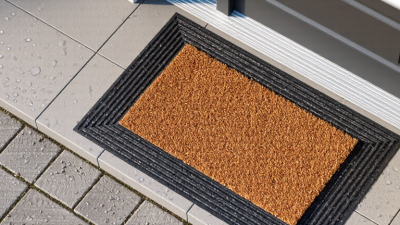
| 2 | Coir-Face Outdoor Mat | Coconut husk fiber with rubber or PVC backing | 40 × 60 cm | 1.2–2.0 kg | Effective dry scraping and natural appearance; performs best under a covered entrance. | Shake or vacuum; keep the coir relatively dry | Covered porches and decorative residential entrances | Avoid prolonged saturation because natural coir can retain moisture and shed fibers. |
| 3 | Needle-Punched Polypropylene Mat | Solution-dyed polypropylene with PVC or rubber backing | 45 × 75 cm | 1.0–1.8 kg | Absorbs light moisture, traps dust and offers good color retention when solution-dyed. | Vacuum, shake or rinse | General residential and commercial use | Check pile density, edge binding and backing stability for frequent outdoor exposure. |
| 4 | Recycled PET Woven Mat | Recycled polyester fibers with weather-resistant backing | 50 × 80 cm | 1.0–1.7 kg | Quick-drying surface, moderate dirt retention and lower material impact than virgin polyester. | Vacuum, shake or hose | Eco-conscious retail and mild-to-moderate climates | Request recycled-content documentation if sustainability claims are important for the market. |
| 5 | Aluminum Scraper Mat | Extruded aluminum profiles with replaceable inserts | 60 × 90 cm | 5.0–9.0 kg | High durability, strong scraping action and modular construction for heavy traffic. | Lift, sweep and hose; replace worn inserts | Hotels, offices, retail sites and public buildings | Verify profile height and door clearance before installation. |
| 6 | PVC Loop Mat | Flexible PVC loops with molded PVC backing | 45 × 75 cm | 2.0–3.5 kg | Open loops scrape footwear and let water pass through; resistant to rot and mildew. | Shake or hose | Humid, rainy and tropical markets | Choose UV-stabilized PVC for exposed locations and confirm low-temperature flexibility. |
| 7 | Artificial Grass Mat | Polyethylene or polypropylene grass yarn with latex or PVC backing | 40 × 60 cm | 0.8–1.5 kg | Brush-like fibers remove loose dirt and provide a casual outdoor appearance. | Shake, vacuum or hose | Gardens, patios and lifestyle-focused retail channels | Check drainage holes, yarn recovery and UV resistance for sunny installations. |
| 8 | Microfiber Absorbent Mat | Polyester or polyamide microfiber with non-slip backing | 45 × 75 cm | 0.7–1.3 kg | High moisture pickup and soft surface; generally better in sheltered outdoor areas. | Machine wash where care label permits | Apartments, covered entrances and rainy urban areas | Confirm washing durability, backing adhesion and drying time before bulk purchase. |
| 9 | Interlocking Drainage Tile Mat | Flexible PVC or rubber modular tiles | 30 × 30 cm modules | 3.0–6.0 kg/m² | Raised drainage channels keep the walking surface above standing water. | Lift modules and pressure-rinse | Pool areas, wet entrances and commercial facilities | Evaluate connector strength, edge ramps and compatibility with local safety requirements. |
| 10 | Recycled Rubber Logo Mat | Recycled rubber granules with molded or printed surface | 60 × 90 cm | 3.5–6.0 kg | Heavy and stable, with good scraping performance and resistance to rain and abrasion. | Sweep, hose or pressure-rinse | Commercial entrances, schools and service businesses | Check odor level, recycled-content consistency, print durability and edge safety. |