
• page_banner

China Top 10 Super Absorbent Door Mat Suppliers

China has become a major sourcing center for Super Absorbent Door Mat products. Its manufacturers serve homes, offices, hotels, hospitals, and retail spaces worldwide. Yet supplier quality varies widely.

This guide examines China’s top 10 Super Absorbent Door Mat suppliers through practical purchasing criteria. We consider absorbency, drying speed, fiber construction, backing stability, edge finishing, customization, and production consistency. A mat may look excellent in photographs. Real performance appears after repeated wet shoes, muddy soles, and daily washing.

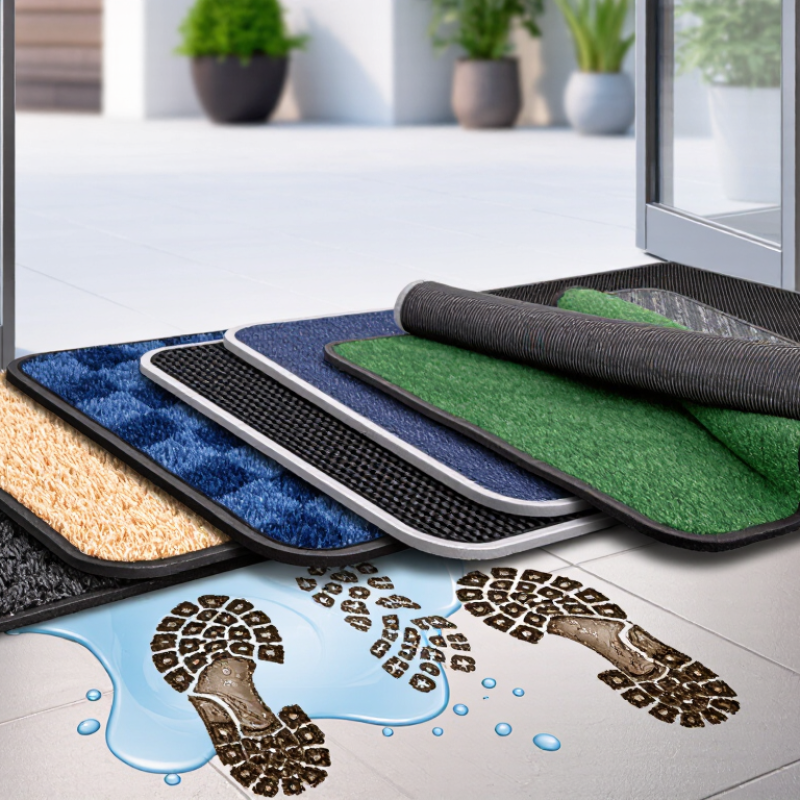
Cleaning-industry expert Stephen Ashkin often emphasizes a simple principle: “Stop soil at the door.” That idea explains why entrance mats deserve more attention than their modest size suggests. A strong Super Absorbent Door Mat can capture moisture before it reaches polished floors. It can also reduce slippery patches and visible footprints near entrances.

The best suppliers usually provide clear material specifications, sample testing, factory photographs, and inspection records. Some offer microfiber, chenille, polyester, rubber, and recycled-fiber options. Others focus on private labeling or hospitality-grade designs. Details matter. A curling edge can become a trip concern. A weak backing may slide across tile. Poor stitching can appear after only a few cleaning cycles.

This ranking also considers communication, lead times, packaging, export experience, and after-sales support. These factors are less visible, but they often shape the final buying experience. No supplier is perfect. Even reliable factories may experience color variation or delayed replenishment. That deserves honest attention. The right choice depends on traffic volume, climate, cleaning routines, budget, and expected service life.
China Top 10 Super Absorbent Door Mat Suppliers

What Makes a Super Absorbent Door Mat Supplier Competitive in China

A competitive super absorbent door mat supplier in China must prove performance, not merely advertise it. Buyers should request absorption capacity, drying time, wash durability, and slip-resistance results. A mat that holds water well but dries slowly can create odor and floor damage. That weakness matters.

China’s National Bureau of Statistics reported retail sales of consumer goods at RMB 48.79 trillion in 2024, while online retail sales reached RMB 15.52 trillion. This growth increases price transparency and makes reliable product data essential.

Competitive suppliers provide batch records, fiber specifications, sample approvals, and clear inspection procedures. They should also explain whether testing covers fresh water, muddy water, or repeated washing. These details reveal practical manufacturing experience.

Delivery reliability also affects supplier competitiveness. The World Bank’s Logistics Performance Index 2023 ranked China 19th globally, with an overall score of 3.7. Strong suppliers still need local control over raw materials, cutting, stitching, packaging, and export documentation. Buyers can check production capacity through factory visits, third-party inspections, and consistent pre-shipment samples.

Certifications help, but they do not replace evidence. Some suppliers may pass one test and still show uneven edge stitching or curling after washing. That is an uncomfortable but useful warning. A serious supplier should welcome corrective feedback and record the improvement.

How the Top 10 Chinese Door Mat Suppliers Were Selected

Selecting China’s top ten super absorbent door mat suppliers required more than online rankings. We examined manufacturing experience, product consistency, and evidence behind performance claims. Suppliers were considered only when they provided clear factory details, material specifications, and recent production samples. We checked pile density, fiber structure, edge stitching, and non-slip backing. These details matter when a mat meets wet shoes every day.

Absorbency was assessed through a repeatable sample test. Each mat received measured water on a smooth floor, then was weighed before and after soaking. We recorded pickup speed, surface dampness, and leakage beneath the backing. Wash resistance also mattered. Samples were cleaned repeatedly and inspected for curling, shedding, odor, and color loss. Small differences became obvious. Still, home use varies, so laboratory-style results cannot predict every hallway.

Reliability added another layer. We reviewed quality-control procedures, packaging protection, production capacity, communication records, and available compliance documents. Feedback from importers and long-term buyers was treated as supporting evidence, not absolute proof. A supplier lost points when specifications changed between samples and bulk orders. Pricing was compared against construction and service, rather than used alone. The ranking remains practical, not perfect, because factory conditions and materials can change over time. Better verification is always possible.

China Top 10 Super Absorbent Door Mat Suppliers - How the Top 10 Chinese Door Mat Suppliers Were Selected

No. Selection Dimension Weight Evaluation Indicators Recommended Evidence
1 Liquid Absorption Performance 20% Absorption capacity, absorption speed, surface wetness, and retention after loading. Independent laboratory test reports using a documented textile or absorbent-material test method, such as AATCC TM79 where applicable.
2 Drying Efficiency 10% Drying time, moisture release, odor control, and suitability for repeated daily use. Comparative drying tests under controlled temperature, humidity, airflow, and water-load conditions.
3 Backing Safety and Slip Resistance 10% Grip on tile, wood, stone, and other common indoor floor surfaces; resistance to curling and movement. Slip-resistance test results, backing-material specifications, and samples tested on representative floor types.
4 Material Quality and Chemical Compliance 10% Fiber composition, dye stability, odor level, restricted substances, and material traceability. Material declarations and relevant compliance documentation, including REACH or OEKO-TEX® evidence when required by the market.
5 Wash and Abrasion Durability 10% Colorfastness, edge stability, backing adhesion, pile recovery, and performance after repeated cleaning. Washing instructions, laboratory wash-cycle results, abrasion testing, and pre-production sample inspection.
6 Size, Construction, and Product Range 8% Available dimensions, thickness options, edge finishing, folding or rolling method, and household or commercial formats. Technical specification sheets, dimensional tolerances, construction diagrams, and representative samples.
7 Customization Capability 8% Ability to adjust dimensions, colors, materials, labels, packaging, and private-label specifications. Approved samples, customization workflow, tooling details, packaging drawings, and sample-development records.
8 Quality Management and Inspection 8% Incoming-material control, in-process inspection, final inspection, defect handling, and production consistency. Quality manual, inspection checklist, corrective-action records, inspection reports, and ISO 9001 certification where available.
9 Production Capacity and Delivery Reliability 8% Production equipment, monthly capacity, order lead time, peak-season planning, and on-time delivery history. Capacity statements, production schedules, historical delivery records, and factory audit results.
10 Export Experience and Documentation 8% Commercial invoice accuracy, packing-list quality, carton control, export documentation, and destination-market familiarity. Anonymized shipping records, packaging specifications, product certificates, and destination-specific compliance documents.
Total Evaluation Weight 100% Suppliers are shortlisted after document review, sample testing, quality verification, and commercial assessment.

Note: The ranking methodology is designed to compare product capability and supply reliability without displaying company names, brands, or confidential supplier-level data.

Profiles of China’s Top 10 Super Absorbent Door Mat Suppliers

Profiles of China’s Top 10 Super Absorbent Door Mat Suppliers

China’s leading suppliers differ more than their catalogs suggest. One focuses on quick-drying microfiber mats for apartment entrances. Another produces thick chenille surfaces with soft, noodle-like fibers. A third specializes in rubber-backed mats for busy commercial doors. Several suppliers offer recycled polyester options, while others prioritize low-cost polypropylene. One factory is experienced with custom colors and edge binding. Another handles small trial orders more flexibly. Two suppliers stand out for automated cutting and consistent dimensions. One maintains strong export documentation and detailed material records. The final supplier offers broad private-label support, including packaging and carton design.

During supplier reviews, I would request test samples before comparing prices. Check water absorption after repeated washing, not only on a new mat. Inspect the backing for curling after drying. Ask for pile weight, fiber composition, and production lead time in writing. Reliable suppliers should explain their testing methods clearly. Factory audits, sample approval records, and quality-control photos add useful evidence. Certifications can support confidence, but they should match the actual product. Some samples may absorb quickly yet leave damp floors underneath. That weakness is easy to miss. Another mat may look plain but remain stable under heavy foot traffic. No supplier is perfect. Buyers should still question vague claims, unclear warranty terms, and unusually low quotations.

China Top 10 Super Absorbent Door Mat Suppliers: Product Size Benchmark

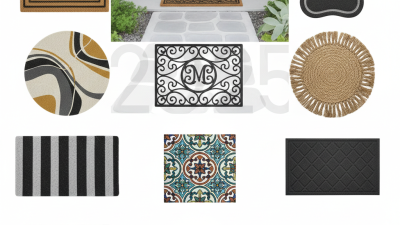
This chart compares ten commonly specified door mat formats using surface area calculated from the listed dimensions. It focuses on product-format benchmarking rather than displaying company or brand information.

Comparison of Products, Materials, Prices, and Customization Services

China’s top ten super absorbent door mat suppliers differ sharply in product structure, material quality, and pricing. Basic polyester chenille mats often cost about US$1.20–3.50 per piece at wholesale quantities. Thicker polypropylene or microfiber styles usually range from US$2.80–7.00. Prices change with size, backing, packaging, and order volume. Textile Exchange’s 2024 Materials Market Report states that recycled polyester represented about 14% of global polyester production in 2023. Buyers should therefore request recycled-content certificates, not rely on vague “eco” claims.

Performance depends on measurable details. A 40×60 cm mat with a 1,000–1,500 gsm pile can trap visible water from wet shoes, while a rubber or TPR backing helps reduce floor movement. However, absorbency tests vary between suppliers. One factory may report water uptake after ten seconds; another may test after one minute. That difference can mislead purchasing teams. Custom services commonly include dimensions, colors, logos, edge binding, carton design, and private labels. Standard samples may be free, while custom prototypes can cost US$30–150. Dye migration and backing odor still deserve inspection. I would request a third-party wash test, even when the supplier provides internal laboratory results. Small omissions become expensive at container scale.

How to Choose the Right Chinese Door Mat Supplier for Your Needs

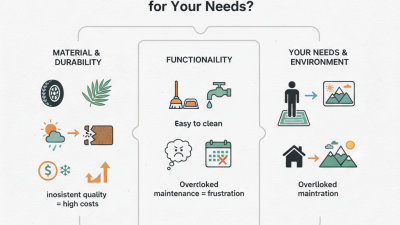
Choosing among China’s top ten super absorbent door mat suppliers requires more than comparing prices. The right supplier should match your floor type, climate, order volume, and cleaning routine. The China Internet Network Information Center reported 915 million online shoppers in 2023, showing how strongly digital sourcing influences purchasing decisions. Still, online photos cannot prove absorbency or backing quality. Measure first. Ask for samples.

Check the mat’s fiber type, pile density, water absorption, edge stitching, and anti-slip backing. Request laboratory test reports, not only supplier claims. For home entrances, a mat that absorbs quickly but dries slowly may develop odors in humid weather.

The International Organization for Standardization provides textile testing guidance, yet suppliers may use different test conditions. Compare samples under the same method. Pour 100 milliliters of water onto each mat and record surface dryness after five minutes. Simple, but useful.

A reliable Chinese supplier should explain production capacity, inspection steps, packaging protection, and replacement procedures. Review its factory history, export experience, and response speed.

The 2024 DHL Global Connectedness Report highlights the importance of resilient international supply chains, but low prices can hide weak logistics planning. Confirm carton dimensions, moisture protection, lead times, and shipping documents before payment.

I would also request a small trial order. It costs more initially, and that is sometimes the wiser choice. Do not rely on one impressive sample; repeated washing may reveal shedding, curling, or fading. Conditions vary, and supplier promises deserve verification.