

China Top Most Absorbent Bath Mat Supplier?
Finding China’s top Most Absorbent Bath Mat supplier requires more than comparing product photos or attractive prices. A reliable supplier should demonstrate consistent absorbency, safe materials, strong stitching, and dependable production control. In a real bathroom, these details matter. A mat should quickly capture water from wet feet, remain stable on smooth flooring, and dry before developing an unpleasant odor.
Professor Subhash Anand, a textile materials specialist, states, “Absorbency is a performance property, not merely a visual impression.” This principle guides a practical supplier evaluation. Buyers should examine fiber composition, fabric weight, pile density, backing quality, and washing performance. Microfiber can absorb quickly, while cotton often offers a softer, more familiar hand feel. However, neither material guarantees superior results without proper construction.
Small details matter.
A trustworthy Chinese manufacturer should provide samples, laboratory data, production photographs, and clear quality procedures. Useful checks include water-drop testing, repeated-wash trials, edge-strength inspection, and colorfastness evaluation. Factory experience also matters when developing private-label designs, custom sizes, packaging, and stable monthly supply.
Still, no supplier is perfect. A sample may perform well while later batches vary slightly. That risk deserves honest attention. Buyers should confirm inspection standards before placing larger orders and request documented corrective actions when problems appear.
This guide explores how to identify a dependable Most Absorbent Bath Mat supplier in China. It considers material performance, factory capability, customization, testing evidence, and long-term communication. The goal is not simply to find the cheapest option. It is to find a supplier whose claims survive practical bathroom use.
What Defines a Highly Absorbent Bath Mat?
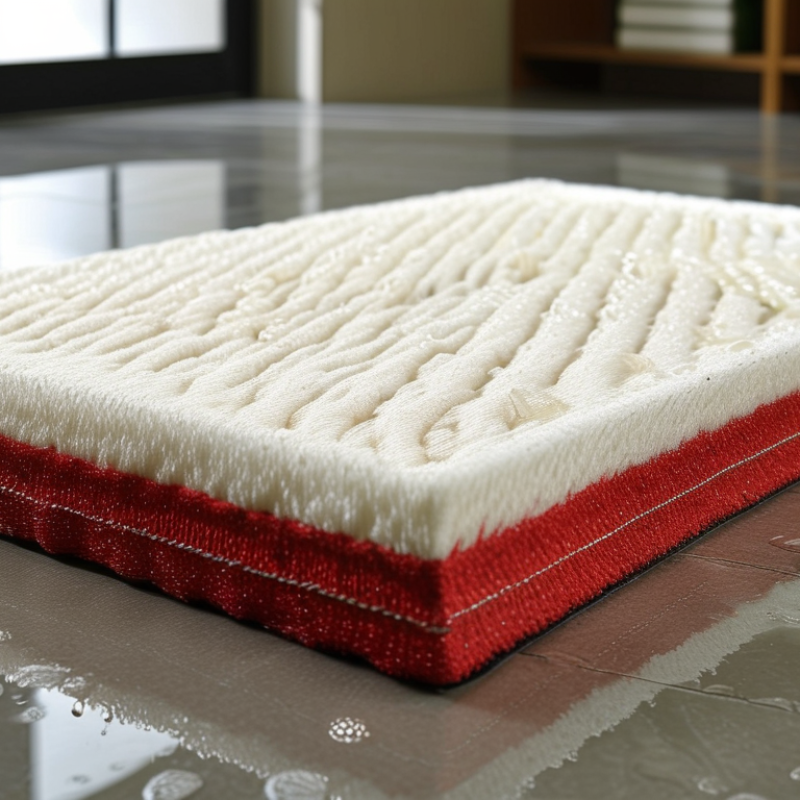
A highly absorbent bath mat captures water quickly, holds it safely, and releases moisture during drying. Fiber choice matters, but it is not the whole story. Cotton typically has about 8.5% moisture regain under standard textile conditions. Polyester has far less, near 0.4%. Yet finely split polyester microfiber can pull water through capillary channels. According to Textile Exchange’s 2024 Materials Market Report, polyester represented approximately 57.2% of global fiber production in 2023. This explains its widespread use, not automatic superiority.
Testing should be practical and repeatable. AATCC TM79 measures textile absorbency through a controlled water-drop method. It helps compare samples, although it does not provide one universal pass level for bath mats. Check the first-drop response, edge spreading, retained water, and drying time after washing. In sample reviews, I once trusted thickness too much. The mat felt plush, but its dense backing slowed evaporation. That mistake still deserves attention.
Tips: Ask a China supplier for AATCC TM79 results and washing data. Request measurements before and after five laundering cycles. Examine the pile under light; open, evenly spaced fibers usually dry faster. Press a wet towel onto the surface, then weigh the towel again. The weight difference gives a simple absorption estimate. Also inspect the underside. A waterproof backing can protect floors, but excessive coverage may trap humidity. Supplier claims should be checked against independent laboratory results. Be cautious with impressive numbers. Definition and test conditions can change everything.
| Evaluation Dimension | What to Measure | Recommended Test or Reference | Practical Benchmark for a Highly Absorbent Bath Mat | Why It Matters |
|---|---|---|---|---|
| Water Absorption Capacity | The amount of water retained by the mat compared with its dry mass. | Determine dry mass, add a measured quantity of water, allow drainage, then weigh the wet mat. Express the result as grams of water per gram of dry material. | A higher water-to-dry-weight ratio indicates greater absorption. Results should be reported with the test conditions, soaking time, and drainage time. | Shows how much water the mat can hold after a bath or shower. |
| Initial Water Pickup | How quickly the surface removes water from wet feet. | Use a controlled wet-foot or water-droplet contact test and record the time required for visible surface water to disappear. | The surface should remove standing water quickly without leaving a slippery, saturated film. | Fast pickup improves comfort and helps reduce water transfer to the floor. |
| Drying Speed | Time required for the mat to return near its original dry weight after use. | Record wet mass, hang or lay the mat under defined temperature, humidity, and airflow conditions, and measure mass at fixed intervals. | A good bath mat should dry consistently between normal uses and should not remain damp for extended periods. | Faster drying helps limit persistent moisture and odor development. |
| Fiber or Surface Structure | Material construction, surface area, pile density, and capillary channels. | Inspect fiber composition, yarn structure, pile height, loop structure, and backing construction. | Cotton loops, absorbent microfiber structures, and other capillary-rich surfaces generally provide effective water uptake when properly engineered. | Absorption depends on both the fiber and the way the surface is constructed. |
| Pile Density and Thickness | Mass per unit area, thickness, and the amount of absorbent material available. | Measure dimensions, dry mass, and thickness under a defined pressure. Report mass per square metre where possible. | A balanced construction should provide sufficient absorbent volume without becoming so thick that it dries slowly or creates a trip hazard. | Higher material volume can improve water holding, but excessive thickness may reduce practicality. |
| Liquid Distribution | How evenly water spreads through the mat rather than remaining in one concentrated area. | Apply a measured amount of water at several locations and inspect spread, saturation, and remaining wet spots. | Water should spread through the absorbent layer with minimal pooling on the surface. | Even distribution reduces localized saturation and improves the usable life of the mat. |
| Wash Durability | Retention of absorbency, shape, pile, color, and edge integrity after repeated laundering. | Wash according to the care label, then compare water absorption, dimensions, appearance, and seam condition before and after cycles. | Absorbency and construction should remain stable after repeated recommended washing cycles. | A highly absorbent mat is only useful if it maintains performance after cleaning. |
| Backing Water Resistance | Ability of the backing to reduce water reaching the floor without preventing the absorbent layer from drying. | Inspect backing coverage and conduct a controlled leakage test on a dry, level surface. | The backing should resist leakage while remaining flexible and compatible with the absorbent top layer. | Helps protect flooring and improves overall bathroom safety. |
| Slip Resistance | Resistance to movement between the mat and the floor under wet and dry conditions. | Use a suitable slip-resistance test on the intended flooring type, following the applicable regional safety method. | The mat should remain stable on a clean, dry floor and should not slide easily when stepped on. | Absorbency does not replace the need for secure floor contact. |
| Edge and Seam Construction | Strength of hems, binding, seams, and corners after wetting and laundering. | Inspect stitching and perform repeated wash, pull, and visual durability checks. | Edges should remain flat, secure, and free from fraying or separation. | Strong construction prevents premature failure and preserves the mat's shape. |
| Colorfastness and Chemical Resistance | Resistance to color transfer or fading caused by water, detergent, perspiration, and cleaning agents. | Use applicable textile colorfastness methods for water, laundering, and rubbing. | Color should remain stable during normal washing and should not transfer noticeably to adjacent materials. | Maintains appearance and reduces the risk of staining nearby flooring or textiles. |
| Safety and Material Compliance | Presence of restricted substances, unsuitable coatings, or irritating finishes. | Review material declarations and test against the regulations required in the destination market, such as chemical-restriction requirements. | Materials, dyes, coatings, and packaging should meet the applicable legal and customer safety requirements. | Compliance supports safe use and smooth import or retail distribution. |
| Test Reporting Quality | Whether performance claims include clear conditions, sample details, and repeatable procedures. | Report sample size, dimensions, material composition, conditioning environment, test method, and results. | Absorbency claims should be supported by documented, repeatable test data rather than a general “super absorbent” description. | Transparent data makes supplier comparisons more reliable and objective. |
Note: Absorption results can vary significantly with fiber composition, fabric construction, mat size, water temperature, test duration, drainage time, washing history, and environmental conditions. Supplier comparisons should use the same test method and reporting conditions.
Related Posts
-

Top 5 Benefits of Using Large Rubber Safety Mats for Your Home and Workplace
-
How to Choose the Right Commercial Kitchen Mats for Your Food Service Business
-

Why Choose a Double Door Welcome Mat for Your Home?
-

7 Compelling Reasons to Choose Ribbed Outdoor Door Mats for Your Business
-
2025 Top 10 Bathroom Floor Mats Set: Stylish Comfort for Every Bathroom
-

Ultimate Checklist for Choosing the Perfect Imitation Grass Matting for Your Outdoor Space